
Why you need brand photography earlier than you expect
Brand photography is often treated as something you invest in once a business feels settled. Once the offer is clear, confidence has grown, and the marketing is already working well enough to justify improving how it looks.
In that framing, photography becomes something you add on later, rather than something that actively supports the work of marketing from the start. It’s positioned as a refinement, not a foundation.
What I see in practice is slightly different. Many capable business owners are doing solid, thoughtful work, yet finding that showing up consistently feels harder than it should. Not because they don’t know what they do, or who they help, but because their visual assets aren’t doing any real work for them.
The need for clear purpose upfront
When brand photography isn’t planned with a clear purpose, it tends to sit outside the rest of the marketing system rather than supporting it. Images exist, but they’re not designed to make decisions easier, reinforce key messages, or reduce the effort involved in staying visible over time.
That’s why I’ve come to think about why you need brand photography in much more practical terms. Not as a confidence exercise, and not as something purely expressive, but as part of the underlying infrastructure that supports consistent marketing. When photography is planned this way, it stops being something you work around and starts becoming something that quietly supports everything else you’re trying to do.
Why brand photography is so often treated as optional
For many small business owners, brand photography doesn’t sit clearly in any single category, often being viewed as useful but not essential. It’s clearly an asset, but it rarely feels urgent. There is always something more pressing to deal with first, whether that’s refining an offer, finding clients, or simply keeping the business running day to day.
Photography is therefore pushed down the list, not because people don’t value it, but because it’s framed as something that makes things look better rather than something that makes things work better.
Waiting until ... until ...
That framing shows up very early. People talk about waiting until they feel more confident, more visible, or more established, as though photography is something you earn once the business reaches a certain stage. I see this hesitation regularly, particularly around the idea of feeling ready, which I’ve written about in more depth in this post on feeling ready for brand photography.
There’s also a widespread assumption that photography is primarily about personality or expression. Images are expected to communicate everything at once, from credibility and warmth to professionalism and approachability, without being tied to any specific job inside the marketing system. When that’s the expectation, photography can feel intimidating rather than supportive.
Setting the foundations
Another reason it’s treated as optional is that the problem it solves is often indirect. When someone struggles with consistency, decision-making, or momentum in their marketing, they don’t always connect that difficulty back to their visual foundations. Instead, the friction shows up later, when they’re trying to decide what to post, how to present their work, or whether their online presence actually reflects what they do.
This is often the point at which people start questioning what kind of business photography they actually need, because the images they have don’t feel quite right, even if they can’t immediately explain why.
Photography ends up being treated as a reaction to those problems rather than part of the structure that could have prevented them to start with.
If you’re starting to see your own photography in this description, this is exactly the thinking I built into my Brand Photo Starter Kit:

What happens when photography isn’t doing a defined job
When photography isn’t planned with a clear purpose, individual images tend to carry far more weight than they should.
A single photo is expected to do everything at once. It needs to explain the business, signal credibility, feel professional, show personality, and reassure potential clients, often without any wider context or supporting images around it. The photograph is no longer just illustrating the work. It’s being asked to stand in for positioning, consistency, and trust.
That’s a difficult job for any one image to do.
Without a defined role, images are used reactively rather than deliberately. People scroll through their camera roll or image library trying to work out which photo might fit a particular post, announcement, or page, rather than choosing from a set of images that were designed to support those needs in the first place.
Friction starts to creep in
Decisions that should be straightforward begin to feel loaded. Choosing an image becomes a judgement call rather than a practical step, and over time that uncertainty feeds into wider issues with consistency. I’ve written separately about how this shows up in practice when businesses struggle with consistency in social media photos, but the root of the problem is usually structural rather than tactical.
When photography hasn’t been designed to carry specific messages on its own, the business owner ends up compensating in other ways. More explanation is added to the copy. Posts are delayed while choices are second-guessed. Visibility becomes something that requires energy and attention each time, rather than something that fits smoothly into a routine.
None of this happens because people are doing anything wrong. It happens because the photography hasn’t been asked to do a defined job within the marketing system, so it can’t reliably support it.
Brand photography as marketing infrastructure
When I talk about brand photography as “infrastructure”, I’m not using the word as a metaphor. I mean it in the same practical sense as systems, processes, or tools that support a business day to day and make ongoing work easier to manage.
Good infrastructure is the part of a business that doesn’t need constant attention. It doesn’t ask for a fresh decision every time it’s used, and it doesn’t rely on motivation or inspiration to function properly. Instead, it creates a baseline that other work can sit on, so things run more smoothly and with less effort over time.
Seen this way, photography stops being about individual images and starts being about how those images are meant to be used. The question shifts from whether a photo looks good enough to whether it’s doing the job it was created for.
Questions to ask yourself
Does it support a particular message? Does it sit comfortably alongside the other images already in use? Does it reinforce what the business is trying to communicate, rather than pulling attention in a different direction?
When photography is planned with that kind of purpose, it becomes part of the wider marketing setup rather than something that has to be worked around. It supports consistency without requiring constant thought, and it reduces the amount of interpretation needed every time something is shared. Over time, marketing starts to feel less like a string of one-off decisions and more like a set of repeatable actions that can be sustained.
This doesn’t mean images lose their personality or emotional impact. It simply means they’re created with intention, so they can be used across different contexts without friction and continue to support the business as it grows, rather than needing to be reinvented each time.
Why this matters earlier than most people expect
One of the reasons brand photography is so often postponed is that it’s seen as something you invest in once everything else is in place. Once the services are clearly defined, once pricing feels settled, once marketing feels more predictable, once the business has reached a certain level of stability.
The difficulty with that approach is that photography is often one of the things that helps create that stability in the first place.
When a business has a clear set of images that are designed to be used, rather than just admired, it becomes much easier to build habits around marketing. Decisions about what to share take less time, consistency is easier to maintain, and visibility stops feeling like something that has to be re-decided each week. Those effects compound quietly over time, which is why waiting until later often makes things harder, not easier.
Figuring out how to show up
This is something I see particularly clearly when people are still trying to work out how they want to show up online. The uncertainty isn’t usually about confidence or willingness, but about not having visuals that properly support the stage the business is actually at. That’s why questions about feeling ready tend to come up so early, and why I often return to this idea of readiness when talking about photography.
There’s also a broader point here about how people process and recognise brands. Research consistently shows that consistency and clarity make it easier for audiences to understand and trust what they’re seeing, particularly when information is taken in quickly or repeatedly.
Cohesive visual experiences
As Mailchimp puts it in their guide to consistent email branding, using the same logo, colours, fonts and imagery across every touchpoint creates a cohesive visual experience that boosts recognition and trust over time, because people learn to spot and feel confident in your brand at a glance.
Seen through that lens, photography isn’t something you add once a brand is fully formed. It’s part of how that brand becomes recognisable and easier to engage with over time. Starting earlier doesn’t mean doing everything at once, but it does mean giving the business visual foundations that can grow alongside everything else.
How this shapes the way I work with clients
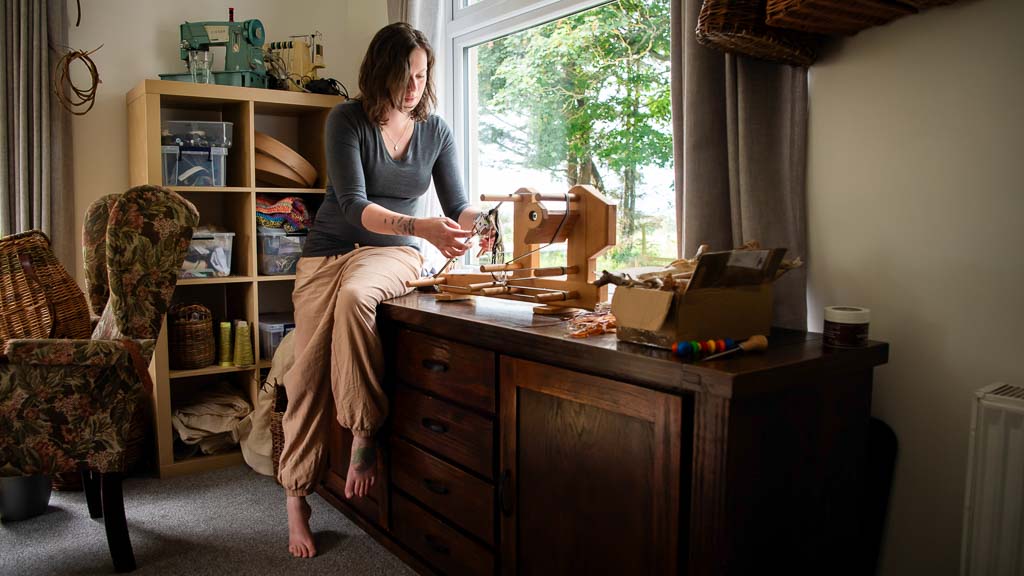
Thinking about brand photography as infrastructure shapes every part of how I approach a shoot.
I don’t start with how someone wants to feel in front of the camera, or how they’d like to be perceived in a general sense. I start with how their business actually operates, how they market week to week, and where photography needs to support that work rather than add another layer of effort.
First things first
That means thinking about what the images need to do before a camera ever comes out, such as where they’ll be used, how often they’ll be shared, and what kind of consistency they need to create across a website, social media, and other touchpoints. It also means planning photography as a set of assets, not a collection of one-off images that all have to work too hard on their own.
The result is photography that fits into a business more naturally. Images are easier to use, easier to return to, and easier to build habits around. Over time, that reduces the friction that so often builds up around marketing and visibility, not because anyone is pushing themselves harder, but because the foundations are doing their job.
This way of working doesn’t remove personality, creativity, or emotional connection from the process. It gives those things a structure to sit within, so they can show up consistently rather than sporadically.
For the people I work with, that usually matters far more than producing a handful of images that look good but are difficult to live with.
How photography fits into your marketing system
Thinking about brand photography as part of your marketing system changes what you expect it to do. Instead of asking it to inspire confidence or carry meaning on its own, you start to treat it as something that supports the day-to-day reality of marketing, making decisions easier and reducing the amount of effort needed to stay visible over time.
When photography is planned this way, it stops being something you work around and becomes something you can rely on. Images are easier to use, easier to repeat, and easier to build habits around, because they were created to support the business as it actually operates, not an idealised version of it.
A stable structure
That’s why I see brand photography not as a finishing touch or a reward for being ready, but as part of the structure that makes marketing simpler, steadier, and more sustainable in the long run.
If you’re based in Edinburgh or elsewhere in Scotland and you’re curious about how brand photography could fit into the way your small business works, please do get in touch with me. I’m always happy to talk things through and help you work out whether this approach makes sense for where your business is right now.