I spent about twenty minutes of a shoot planning call the other day talking about a client’s dog.
Which, if you know me at all, you’ll realise was hardly a hardship.
She mentioned Monty almost in passing and, before either of us quite knew where we’d ended up, we were swapping stories about ticks, rolling in muck, favourite walks, and all the daft things dogs do. I was thoroughly enjoying myself, I have to say.
On paper, that probably sounds like twenty minutes we weren’t talking about her brand photography. Except ,... We absolutely were.
The more she talked, the more I realised Monty wasn’t simply a pet she happened to own. He appeared in almost every story she told me. Weekends revolved around him. Holidays were planned around dog-friendly accommodation and good walks. Where she and her husband went, Monty went too.
Even when she wasn’t actually talking about him, somehow he was still there, so thoroughly woven into the life she loved that it became difficult to separate one from the other.
And because she’s a therapist, that matters.
Professional doesn’t have to mean impersonal
People don’t choose a therapist purely because of the qualifications listed on her website. Naturally, those qualifications matter enormously, but a potential client is also trying to work out whether this is somebody they could trust, warm to, and eventually feel comfortable opening up to.
That’s true of many service businesses, actually. When you're the person delivering the service, clients are choosing both your expertise and the experience of working with you. Your photographs therefore need to communicate more than competence alone.
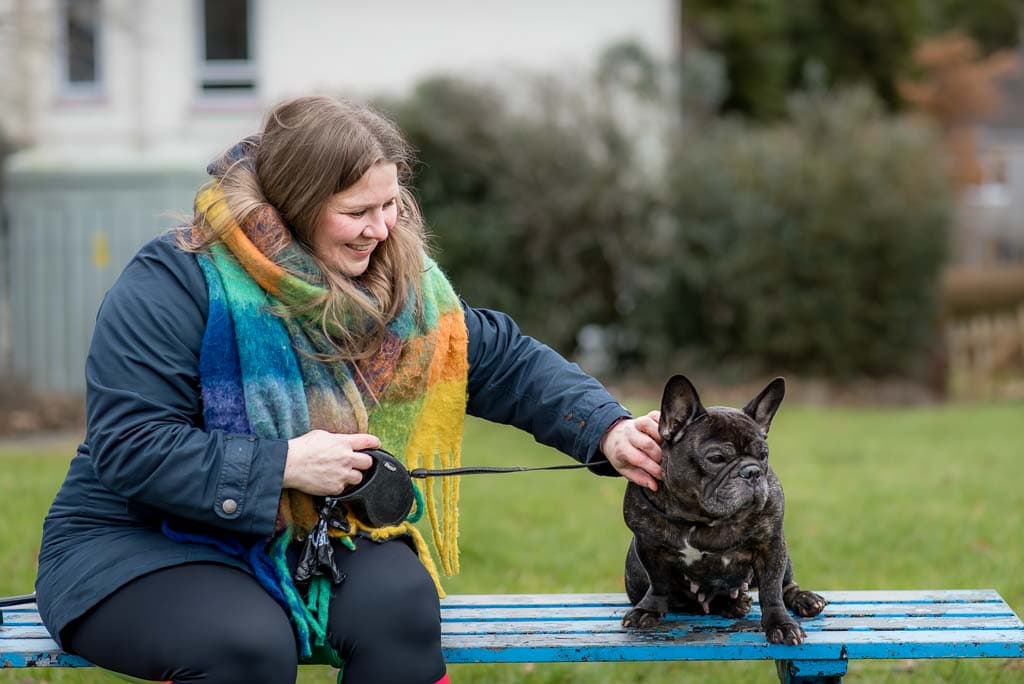
Including a dog in brand photographs can reveal something personal about the business owner without making the image feel any less professional.
A photograph of my client with Monty won’t demonstrate her professional qualifications, and you know what, it doesn’t need to. It'll reveal something else completely: a part of her life that brings her enormous pleasure and makes her immediately more recognisable as a person.
So I stopped her and said, “The dog absolutely needs to be in some of these photographs.”
She looked at me for a second, then broke out into the biggest ever smile. “Oh YES! I’d love that! But I didn’t know it would be possible.”
It was the second half of that answer that stayed with me.
Somewhere along the line, she had decided that this huge, joyful part of her life wasn’t something that belonged in professional photographs promoting her business. Nobody had actually told her that. She had simply placed Monty in the “personal” category and assumed he needed to stay there.
What have you edited out before you’ve even begun?
I wonder how often we all do this?
We remove parts of ourselves before anybody has suggested they are unsuitable. The dog. The allotment. The obsession with sea swimming. The old camper van you’re forever tarting up. The fact that every spare Sunday disappears into the hills with a flask of coffee and a map.
None of those things may be your business, but they’re part of the person running it. When clients are choosing an individual service provider, that distinction matters rather more than it would if they were choosing washing powder.
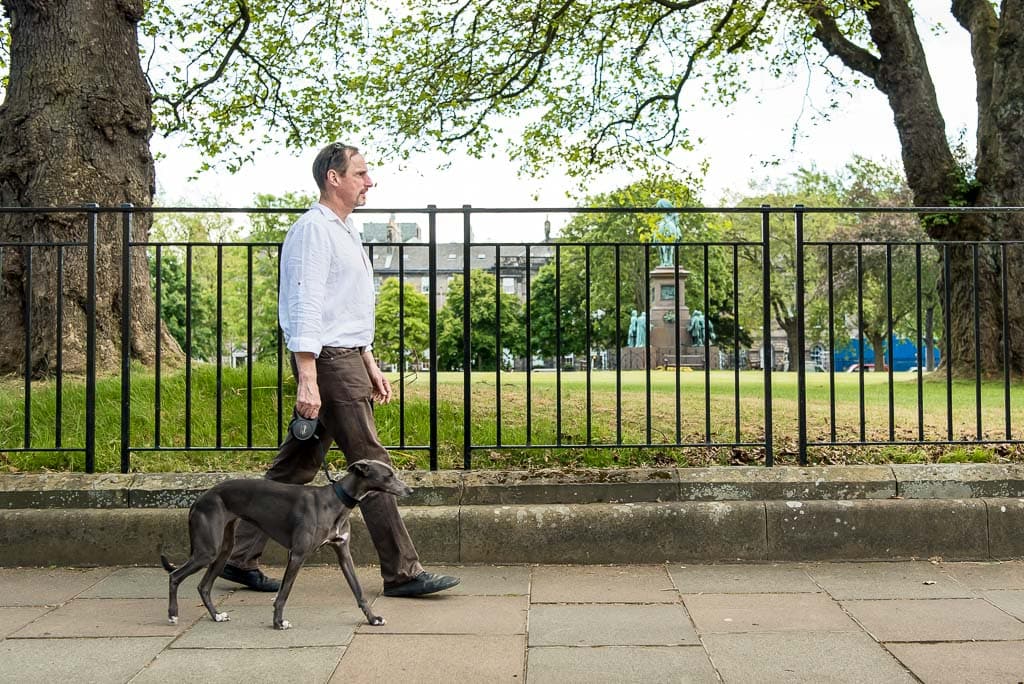
A dog in brand photographs may have nothing to do with the service itself, but can still help potential clients understand and remember the person behind the business.
That doesn’t mean every hobby belongs in your brand photographs, or that your entire private life needs to be turned into marketing material. There’s no need to arrive at a shoot towing your dog, bicycle, camper van, gardening tools, and half the contents of your house simply to prove you’re an interesting person.
The more useful question is whether a particular detail helps potential clients understand or remember something relevant about you.
Perhaps it shows what matters to you outwith work. It might give somebody an easy point of recognition, reveal a value you share, or make the person behind a fairly abstract service feel more real. Sometimes it simply creates a photograph that feels unmistakably like you rather than one that could belong to any old consultant, coach, or therapist with access to a laptop and a pleasant café.
Decide what we need to communicate first
This is one reason personal brand photography works best when we decide what needs to be communicated before planning the photographs. The purpose isn’t to throw every bit of your personality into the frame - that would end up a bit of a mess! No, it’s to recognise which details help the right people form a more accurate impression of you.
I’ve written before about why “just be yourself” isn’t especially useful business advice. You still need to decide which parts of yourself are relevant to the people you want to work with and what those parts help them understand.
In this case, twenty minutes spent talking about a dog told me something important about my client. Monty wasn’t a distraction from the planning call at all - he was actally part of the planning itself.
Although, to be fair, I was probably looking for an excuse to talk about dogs in the first place.
My own Labrador, Roddy, has asked me to point out that he would be delighted to accompany me on every client shoot and “help”. Personally, I think he’s mainly in it for the biscuits.