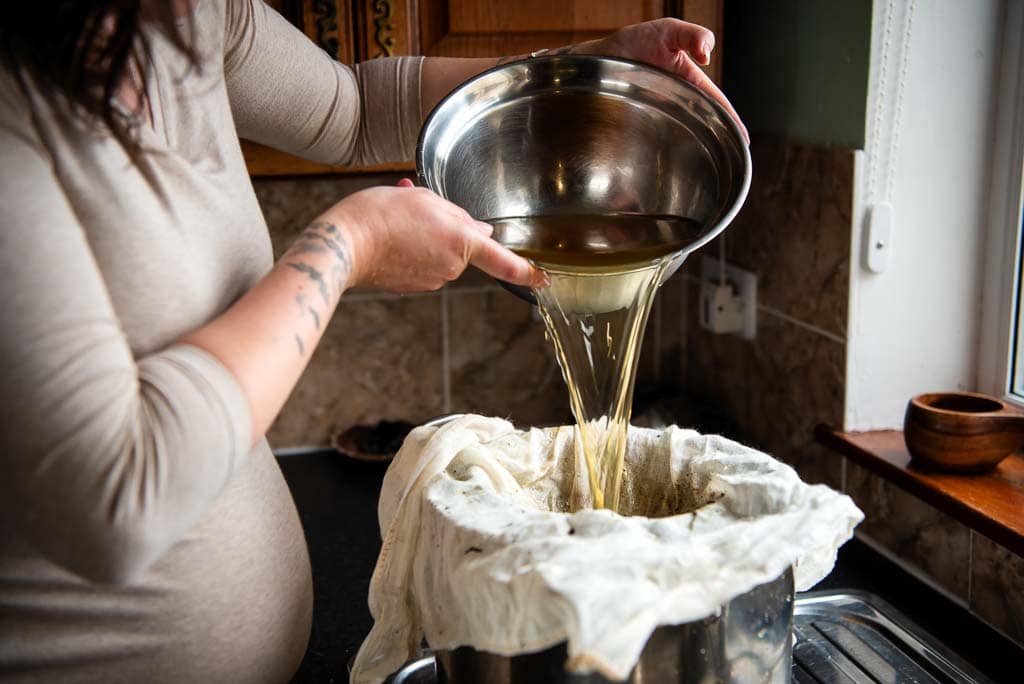
During a brand photography session with heritage craftswoman Leighanne at her home on the Moray coast, I found myself photographing what could, at first glance, have been a deeply regrettable attempt at making lunch.
There was a large pot. There was a bowl full of yellowy liquid. There was a cloth containing something that looked suspiciously like boiled vegetation. None of it was likely to trouble the pages of Delicious magazine.
In fact, Leighanne was straining natural dye made from plants she had gathered herself. It was an important stage in the process of her work, and it revealed something a photograph of the finished piece simply couldn't have shown on its own.
That's what makes this particular image really useful in her marketing - it doesn't merely show what Leighanne makes, but rather it helps somebody understand what goes into making it.
What this Moray brand photography session needed to show
Leighanne runs a heritage crafts business on the Moray coast. Her finished pieces are beautiful, and, naturally, we made sure she had plenty of photographs showing them. After all, a potential customer needs to see what she sells before deciding whether it is right for them, so that was really important.
The difficulty is that a photograph of a finished piece conceals almost everything that went into producing it.
You can't see where the colour came from, how the plants were gathered, the stages involved in preparing the dye, or the extensive knowledge Leighanne drew upon while making it. Unless somebody already understands traditional dyeing methods, they'll just see the finished result without recognising why it's different from something produced far more quickly on a much larger scale.
This photograph fills in one part of that missing information. You can see the plant material inside the pot, the liquid being strained through the cloth, and Leighanne’s hands in the middle of the job. The phrase “natural dye” is no longer merely something you have to take on trust, because one of the actual stages involved in making it is right there in front of you. It's proof of the process.
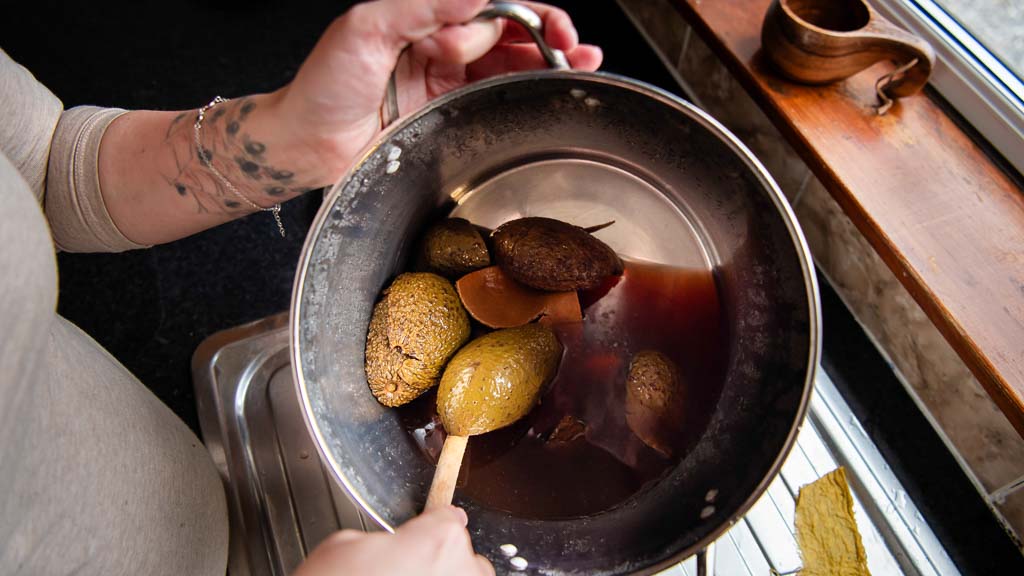
The boiled-up avocado skins here give the words “natural dye” visible evidence, helping potential customers understand what goes into Leighanne’s finished pieces as well as supporting promotional materials for her in-person workshops.
A finished result can hide the work that made it so valuable
Now here's something you might not have thought of: the kitchen matters as much as the pot.
This is very obviously Leighanne’s own kitchen, not a carefully disguised corner of a fancy factory. She's gathered - or grown - the plants and is making the dye in small batches using pots, cloths, bowls, and ordinary kitchen equipment. There's a visible connection between the materials, the maker, and the finished piece.
For a heritage crafts business, that is so important! Words such as “handmade”, “traditional”, and “natural” are bandied about so freely in this industry's marketing that they can sometimes mean little more than “let's show something wholesome, anything'll do”.
But a process photograph gives those words substance. It provides evidence that Leighanne is personally involved in the work and that the traditional methods she describes are genuinely part of how she creates each piece.
The finished result that people are buying still matters, of course it does! The problem comes, though, when the end result is the ONLY thing people ever see. If the knowledge, preparation, and sheer amount of work Leighanne puts into her business and products remain hidden, potential customers have less information for judging how valuable her work actually is.
This applies far beyond handmade products, and unfortunately, service businesses often have an even greater problem because so much of the work being sold is difficult to photograph in the first place.
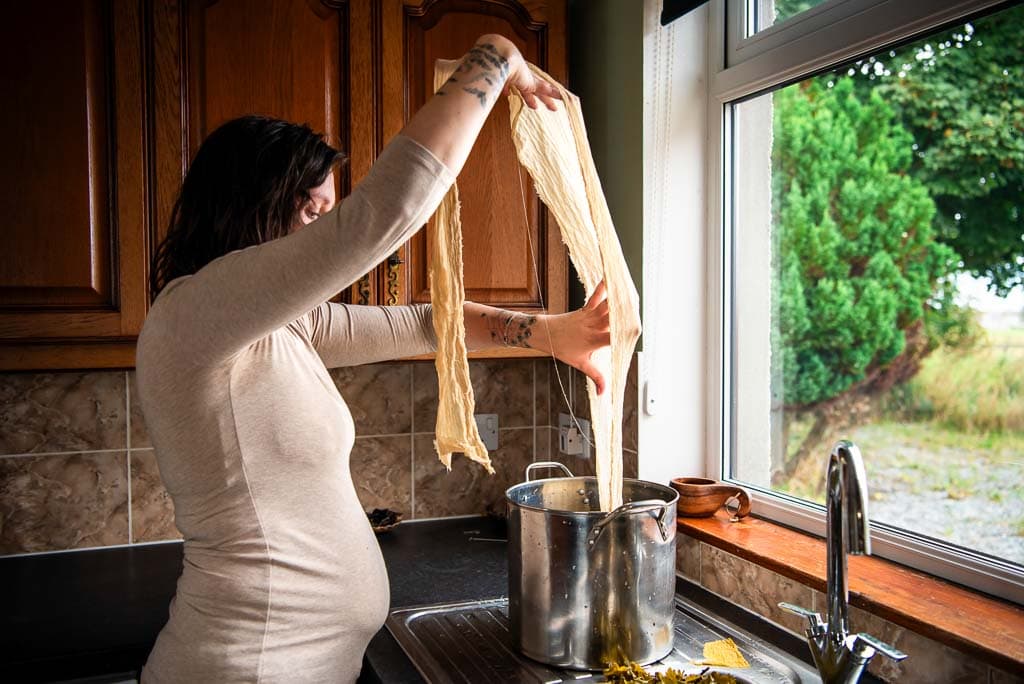
Leighanne making dye in her own kitchen on the Moray coast - revealing where and how the work happens can help to show the value of your business.
Service businesses have the same problem
A coach, consultant, therapist, accountant, independent professional or adviser may spend years developing the knowledge that shapes what happens during one conversation or service session. Their client experiences the meeting, the recommendation, or the finished report, but not necessarily the thinking behind it.
Coaches and consultants are therefore working at a wee bit of a visual disadvantage compared to folks like Leighanne. Much of the value of their kind of work happens through thought, conversation, and preparation, all of which are irritatingly discreet from a photographic point of view.
A coach might review a client questionnaire before a session and note the themes she wants to ask about. A consultant may cover a printed document in annotations before making his recommendations. Somebody delivering a workshop might adapt the exercises, organise the materials, and work through the questions she expects people to raise.
Sadly, none of these activities is as immediately arresting as a stockpot full of vegetation! (Though this is possibly just as well from an insurance point of view! ) But ... Service business brand photographs can still reveal something useful about the care, judgement, and preparation that go into that service.
If potential clients only ever see a pleasant headshot or a photograph of you smiling beside a laptop, they can see that you exist, you have a face, and you own a laptop. Admittedly, these are useful pieces of information up to a point. What they CAN'T necessarily see, though, is why your way of working is worth choosing.
What part of your work do clients rarely witness?
When thinking about what kind of photographs you as a service-based business need, don't simply ponder, “What do I do during the working day?”
That can produce a long list of visually unremarkable tasks, several of which may involve looking at a screen with varying degrees of concern. A better question is:
What would help a potential client understand why I do this work well?
For one business, the answer might be the preparation that takes place before a client meeting. For another, it could be the way research is gathered, the questions used to assess a problem, the books consulted, or the notes made while comparing several possible recommendations. Someone who creates a highly personal service might show how client information is turned into a session plan, while a workshop facilitator could reveal how much thought goes into adapting the same subject for different groups.
The activity itself doesn't have to be visually dramatic, it just needs to reveal something relevant.
That distinction really matters when planning a brand photoshoot. A desk covered in papers isn't automatically evidence of expertise - it may simply be evidence that the desk is covered in papers. But a photograph of said desk becomes truly useful when the viewer can understand what is happening and why that stage contributes to the service they will eventually receive. Because there are bits and pieces on the desk which are clues.
Useful process photographs need a clear purpose
Before deciding what to photograph, I start with what viewers need to understand.
In Leighanne’s case, we wanted to show that her entire business is built on a genuine, hands-on process. That led us to the gathered plants, the kitchen equipment, the straining cloth, and the different stages of making the dye. The photographs weren't included because that activity happened to be going on on the day - I made sure they were set up in advance so I could capture them on the day. I took them because they communicated something important about her work and showed how she does it.
The same thinking applies to a service business. If the message is that you prepare carefully for every client, the photograph needs enough detail for somebody to recognise that preparation. A stock image with an anonymous notebook and a cup of coffee will not necessarily do it, however photogenic the coffee happens to be!
Perhaps the image could show your hand annotating a document, with the structure of your notes visible but the confidential details concealed. Perhaps it could include the client questionnaire beside the questions you've prepared for a forthcoming session. Or it might show workshop materials spread out in a way that makes it obvious they've been selected and organised specifically for a particular group or type of client.
Obviously, names and confidential information need to be removed first - accidentally publishing a client’s private notes to demonstrate how conscientious you are would rather undermine the effect!
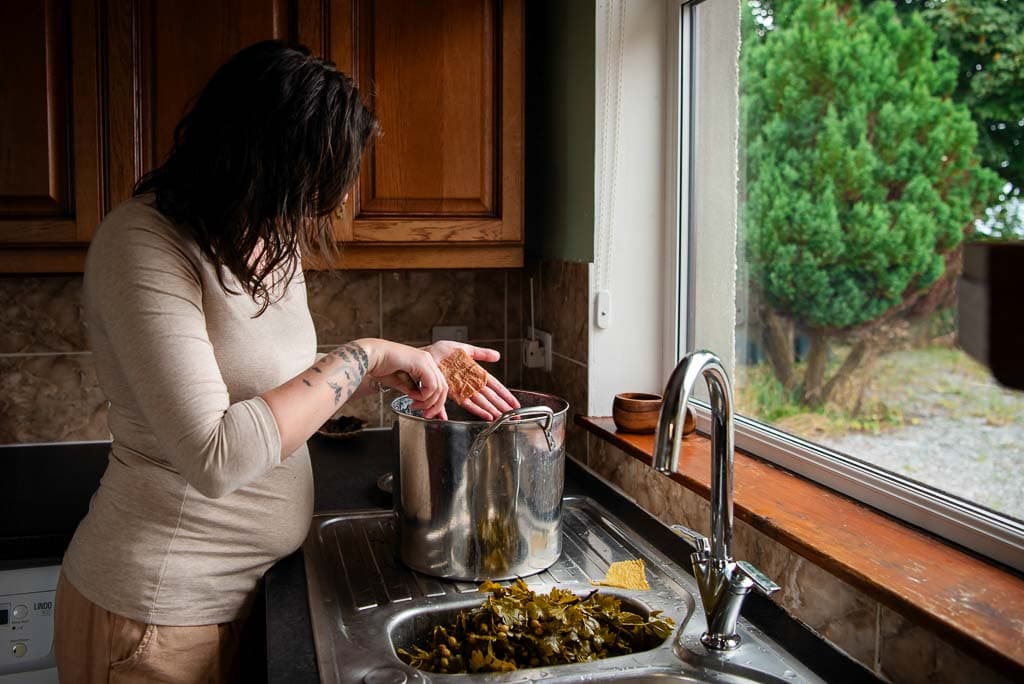
Photographing a specific stage of the process can show the value of your business by giving potential clients something more substantial than the claims seen everywhere like “handmade” or “natural”.
How Leighanne can use any one of these photographs
One useful photograph can support several different pieces of marketing when its purpose is understood.
Leighanne could use these images alongside blog posts or social posts explaining how she gathers plants and turns them into dye, perhaps pairing them with photographs of her finished pieces so people can see both the process and its result.
A picture like this would also work on a product page, in an email explaining why naturally dyed pieces vary, or when promoting a workshop that teaches other people how to make their own dye. In each case, the photograph is doing a whole lot more than just making the promotion page attractive, it's supplying visible evidence for something Leighanne wants the reader to understand.
This is one reason I advise clients to think about how they will use their brand photographs before we create them. When an image has a clear job, it becomes much easier to recognise where it belongs and what subject it can help explain.
Start with the work your client never sees
I bet there's almost certainly a part of your work that benefits your clients but which they rarely witness.
The next time you're doing it, have a wee pause before you tidy everything away. Ask someone to take a simple phone photograph of you with the notes, materials, diagrams, plans, or half-finished work still visible. It won't replace properly planned professional brand photography, of course, but it would do for a quick social post and may show you which parts of your process are worth including when you next build a fuller image library.
In Leighanne’s case, the revealing detail happened to be a pot of boiled plants being emptied over the kitchen sink. It tells us far more about the skill and work behind her finished pieces than a generic photograph of her smiling at the camera ever could.
As a brand photographer working across Scotland, including Moray and the north-east of Scotland, this is exactly the sort of detail I'm always looking for: what somebody needs to see before they can properly understand the value of it.
If you need photographs that show the value of your business, rather than simply showing your face, get in touch and tell me a little about what you do. I’ll help you plan a brand photography session that makes the thought, care, and expertise behind your work easier for potential clients to see and understand.