The problem with relying on a single headshot
A single headshot is often being asked to explain far more about an independent professional’s business than it ever could (the poor thing!), which is why it so often starts to feel inadequate even when the photograph itself is perfectly decent.
For someone running their own professional practice or service-based business, that one image tends to appear everywhere – on a website, on LinkedIn, in proposals, and alongside written content – and each time it appears, it’s expected to communicate competence, personality, trustworthiness, and some sense of how the business operates. That’s an unfairly hefty brief for one tightly framed portrait with no surrounding context.
The problem here usually isn't the quality of the photograph. In most cases, the headshot’s been professionally taken and entirely usable for what it was originally intended to do. But ... The difficulty begins when it’s pushed beyond that role and used as a stand-in for wider communication, because a headshot can confirm who someone is, but it can’t show how they work or what it’s like to work with them.
Over time, this creates a mismatch between the business itself and how it’s represented. The work the business owner carries out may be thoughtful, structured, and well delivered, but the imagery remains limited to a single point of reference, which means much of what makes that business credible isn’t being shown. There's just no context.
What a headshot leaves out
What’s missing from a headshot isn’t quality, it’s information.
When someone’s deciding whether to work with a particular independent professional, they’re trying to build a picture of how that person works in practice. They’re looking for signals that help them understand what working together might involve, how structured the process feels, and whether they can trust how the work will be handled. A single headshot does very little - if anything at all - to support that.
A wider set of business images allows you to show what would otherwise need to be explained at great length in words. Which there's no guarantee people will even take the time to read.
In practice, that means you need images that show:
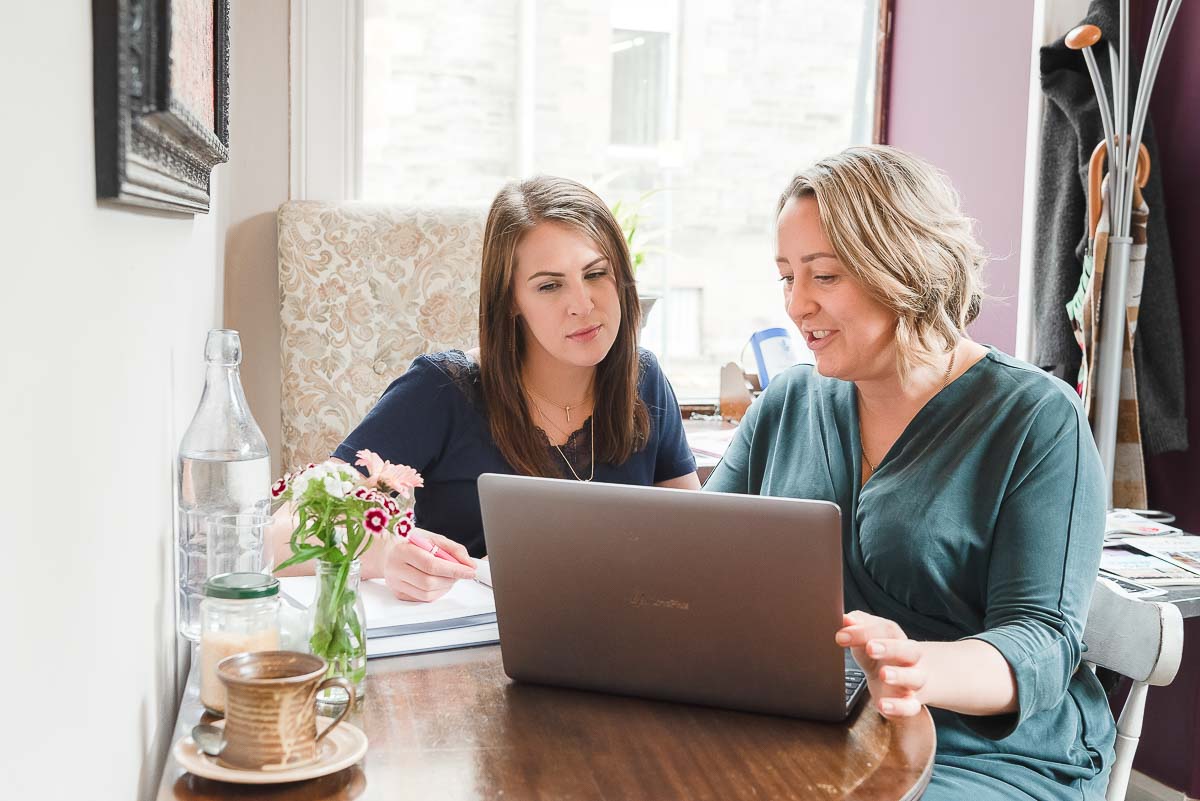
- how you interact with clients
- how you use your space
- how you prepare or structure your work
- what tools or materials are involved
- how you come across in a real working situation
Each of these adds a layer of understanding that a single headshot simply can’t provide, and together they create a clearer picture of the business.
This is why I start by working out what your business needs to communicate before I think about the photography itself, because once those decisions are made, it becomes much clearer which images are worth creating and where they’ll actually be used. You can read more about that approach on my brand photography for independent professionals page, where I explain how the planning shapes the final set of images.
When that all groundwork’s in place, the photography stops being a loose collection of pictures and starts helping the business explain itself properly.

How people decide whether to work with you
When someone’s deciding whether to work with you, they’re not assessing your business in isolation, they’re weighing up whether they feel comfortable placing trust in you as a person they’ll be interacting with directly. And that decision is rarely made on credentials alone.
Two professionals can offer a similar service on paper, with comparable experience and qualifications, and yet one will feel easier to choose - this is where imagery starts to influence the decision more than you might expect.
If someone can already see how you communicate, how you guide a conversation, or how your work unfolds, they don’t have to work that out for themselves. That reduces hesitation, because fewer assumptions are required before they decide to get in touch with you.
If they can’t see or imagine those aspects of your business, they tend to compensate by looking for that reassurance elsewhere, which often means reading more, comparing more, or delaying a decision to contact you that would otherwise have been straightforward.
If you want to decide which images would help someone understand how you work before they ever speak to you, my £7 brand photo starter kit breaks this down into something more concrete. It walks you through the types of images that tend to be most useful and how to decide what your business actually needs, so you’re not left defaulting to whatever feels easiest to create.
What your business photos actually need to do
If you think about your business photography in terms of how potential clients make decisions, it changes what you prioritise. You’re not trying to create images that “represent you well” in a general sense. You’re deciding which images help someone understand how your work operates.
That means starting with looking at what exactly your business needs and where it communicates. A service page, a proposal, or your regular content all require slightly different things, and the most useful images are the ones that answer specific questions in those contexts.
When those questions are answered visually, people don’t have to piece things together from limited information. They can see enough to understand whether your approach suits them.
This also changes how you use your images day to day. If each image has a defined role, you’re not repeatedly searching for something that “sort of works”. You already have images that fit specific situations, which reduces viewers' decision-making and makes your marketing easier and faster to produce.
Why this isn’t solved by adding a few extra photos
It’s tempting to assume the answer is simply to add a handful of additional images alongside your headshot, but this rarely fixes the problem.
If you don’t decide what the images need to show, you end up with more photos, but not more clarity. Each one still tries to cover too much or isn’t tied to a specific use.
That’s why people often have a folder full of perfectly good photographs that they still struggle to use.
The difference comes from deciding in advance what each image is there to do and where it'll be used.
Once those roles are clear, the photography becomes much easier to work with, because you’re no longer trying to make one image fit multiple situations.
That’s the thinking behind both my Elevate brand photography commission, which creates a focused set of images for specific uses, and my Soar commission, which builds a set of images you can use across your website, content, and marketing over the coming months.
A more useful way to think about your photography
Using the same headshot repeatedly isn’t the problem, it’s the expectation placed on it - once you stop asking one image to explain your entire business, it becomes much easier to see what you actually need.
For independent professionals, that usually comes down to showing how the work operates, not just who you are and what you look like. That’s the point where a more considered set of images starts to make a practical difference, because it becomes easier for someone to understand your work without needing further explanation.
If you’re an independent professional in Edinburgh or elsewhere in Scotland and you’d like to talk through what your business needs to communicate and how that would translate into images, you’re very welcome to get in touch - I'm more than happy to talk over what this might look like for you.