How to look professional online without looking corporate
Most independent professionals are trying to get something right that no one has ever properly explained to them.
They want to look credible. They want to be taken seriously. And yet, at the same time, they have no interest in presenting themselves as a larger firm or disappearing into a version of professionalism that feels distant or impersonal.
What often tends to happen instead is much simpler - people play it safe.
They choose photos that feel "professional enough". They pick pleasant-looking locations and backdrops that won't raise questions. Their photos become a wee bit more formal than necessary, the locations edge towards the generic, and their expressions become slightly more restrained. The overall impression leans towards something that feels safe, but not distinctive.
And ... it all starts to look corporate. The very thing they wanted to get away from.
Perhaps not in an extreme or obvious way, but in the sense that the images could belong to almost anyone in a similar role. Which means they don't do much to help someone understand who you are or what it feels like to work with you.
Corporate presentation has become the default version of professionalism, even when it's not the most accurate or helpful way to represent a solo or small practice. The result is that many capable, experienced professionals end up underselling the very thing they're trying to communicate - what makes them different.
Why independent professionals default to corporate-style imagery
This isn't usually a deliberate choice so much as a predictable one, because corporate presentation is often the closest reference point people have when they're trying to look professional on their own.
If you've spent any time working in or around a larger organisation, you'll already be familiar with the visual cues that signal credibility in that environment – clean headshots, neutral backgrounds, restrained expressions, and a general sense of polish that prioritises consistency over individuality. When you come to choose your own imagery, those cues tend to carry over, not because they're necessarily right for your business, but because they're known quantities.
When you're making decisions about your own visibility without an in-house marketing team, and usually in between client work and everything else that comes with running a business, it makes complete sense to choose something that looks "professional enough" and move on.
But you'll often end up with business images that look fine in isolation and don't communicate very much about how the business actually operates.
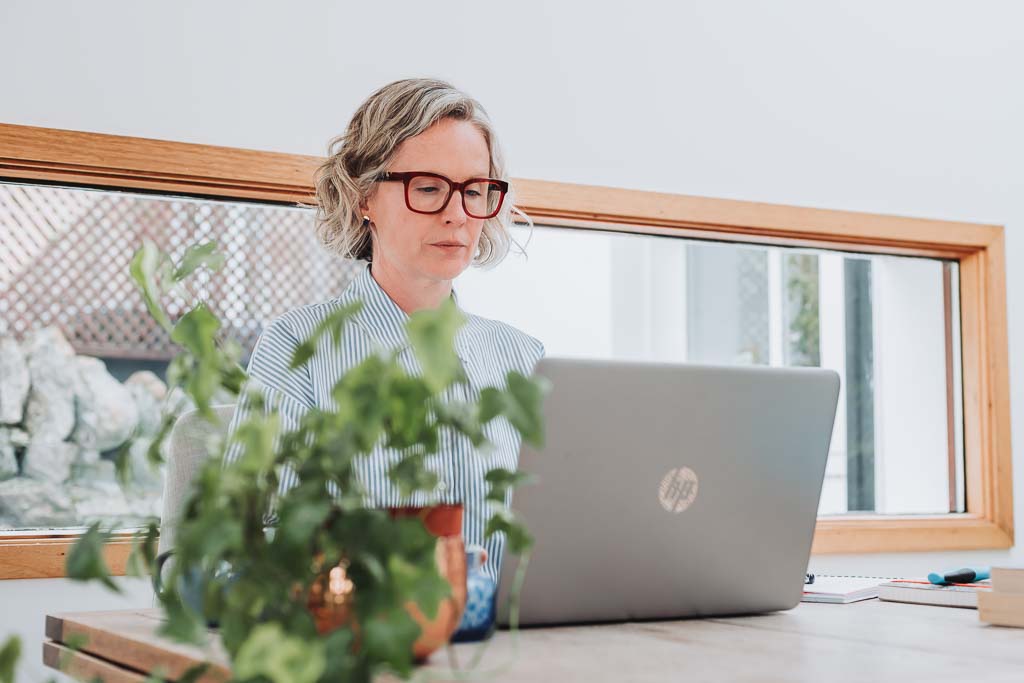
This is where the limitations of relying on one or two generic images start to crawl out of the woodwork. A single headshot, no matter how well taken, is being asked to carry far more meaning than it can reasonably hold. One image can't show how you work, what your process looks like, or what it feels like for someone to work with you.
Corporate imagery works very well for the type of organisation it was designed for. Larger firms benefit from looking consistent, controlled, and slightly impersonal, because those qualities suggest scale, structure, and the presence of systems that sit beyond any one individual.
However, most independent professionals are offering something very different - direct access, personal expertise, and a working relationship that's more flexible and less standardised. I go into this in more detail here: brand photography for independent professionals.
Imagery borrowed from a corporate context can end up removing the very differences that would otherwise help someone decide to work with you.
What “corporate” actually signals, and why it can work against you
Corporate-style imagery doesn't look bad. In most cases, it looks entirely appropriate, which is exactly why people choose it.
The problem is what it implies. It tends to suggest scale, consistency, and a degree of distance between the person in the photograph and the person making decisions, implying there are systems, processes, and layers sitting behind the individual. Which is exactly what larger organisations want to communicate.
For a solo or small independent practice, that usually backfires.
If someone lands on your website or LinkedIn profile and sees imagery that feels corporate, they're likely to assume they're dealing with a business that operates in a more standardised, less personal way. That doesn't mean they won't trust you, but it does mean they're less likely to immediately understand how your work actually feels or what makes you different. In some cases they simply move on to someone whose business is easier to grasp at a glance.
This has nothing to do with image quality. It's about how clearly the images are doing their job.
When your photography is planned around what your business needs to communicate rather than what's generally accepted as "looking professional", potential clients can see right away not just who you are, but how you work and what kind of experience you offer.
If you're moving beyond a single headshot but don't need a full half-day session, my Elevate brand photography session is designed for exactly this. It gives you a small, structured set of images planned around how you'll use them, rather than leaving you to work that out afterwards.
If you'd rather get your thinking straight first, my £7 Brand Photo Starter Kit helps you define what your images need to show and how they'll be used. And when you need a more complete set of images to support your visibility over the next few months, that's where my Soar brand photography commission tends to sit.
What this means for your own images
The question isn't really whether your photos look professional, it's whether they're doing enough work so you don't have to.
If someone lands on your website and immediately understands how you work, what kind of experience you offer, and whether it feels like the right fit, your images are doing their job. If they need to read three sections of copy to piece that together, they're not.
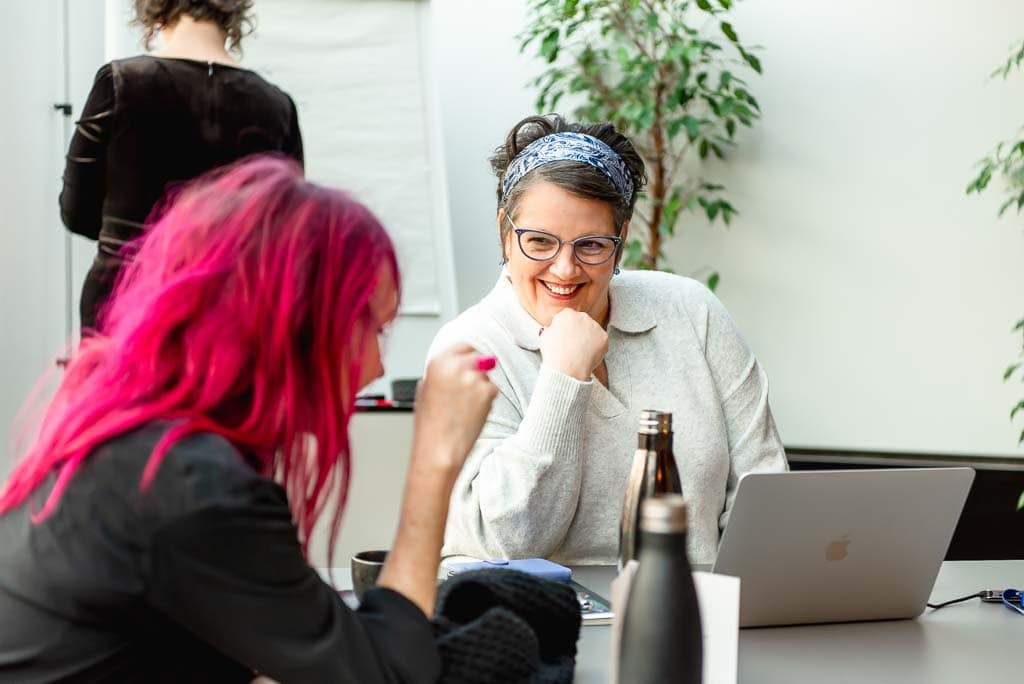
So instead of asking "do these photos look good enough?", you're now asking "what does someone need to see here in order to understand how this business works?" The answer is usually quite practical - it might involve showing you in conversation with a client, working through part of your process, or simply being present in the kind of environment your clients would expect to encounter.
Once you've defined that, the photography itself becomes much more straightforward.You don’t need to look corporate to be taken seriously
If your current images feel a bit more corporate than you'd like, it's usually not because anything has gone wrong. It's because you've defaulted to a version of professionalism that was never designed for the way your business actually works.
You don't need to look like a larger firm to be taken seriously. but you do need to make it easy for someone to understand what you do, and what it would be like to work with you.
My Glasgow brand photography case study for Prospero People shows how that balance can be planned deliberately.
If your current images don’t quite represent your work
If you're an independent professional in Edinburgh or elsewhere in Scotland and you're starting to feel that your current images don't quite represent your work properly, you're very welcome to get in touch. I'm always happy to have a conversation about what you need to show and whether one of my sessions would be a good fit for that.